
Trade shows in 2026 are not what they used to be even two years back.
If you are still doing the old routine – book a booth, put up a banner, hand out some brochures, and hope for the best – you are literally throwing money away. I have seen brands spend thousands of dollars on exhibition space and walk away with barely ten qualified leads. Why? Because they treated a trade show like a passive event instead of an active marketing campaign.
Here is the reality. In 2026, attendees are more distracted, more selective, and harder to impress than ever before. They have seen every trick. They ignore generic freebies. They delete mass emails without opening. So if you want real ROI from your next trade show, you need a strategy that starts weeks before the event, peaks during the show, and continues long after the hall empties out.
Let me walk you through exactly how successful brands are doing this in 2026. No theory. No textbook fluff. Just practical steps you can use for your next exhibition.
Why Most Brands Waste Money on Trade Shows in 2026
Let me be blunt. Most companies lose money on trade shows. Not because trade shows are bad, but because their approach is lazy.
Here is what I see happening all the time. A brand rents a booth. They ship some banners and products. Two junior employees show up, sit behind a table, scroll through their phones, and wait for people to walk by. When someone does stop, they hand over a flyer and ask for a business card. Then they go home and send one generic email to everyone. That is it.
That approach might have worked ten years ago. In 2026, it is a disaster.
Attendees today have zero tolerance for boring booths. They can spot a disinterested staff member from twenty feet away. They receive hundreds of follow up emails after every major show, so yours will get deleted unless you stand out. And they are not impressed by your product sitting on a table. They want to see it work. They want to touch it. They want to understand why it solves their specific problem.
The brands that win at trade shows in 2026 are the ones who treat the entire thing like a three phase campaign. Pre show. At show. Post show. Miss any one of these phases, and your ROI will suffer.
Pre Show Marketing How to Fill Your Schedule Before You Arrive
Successful exhibitors do not show up hoping for the best. They show up with a calendar full of confirmed meetings. And that work starts four to six weeks before the event.
Let me share exactly what this looks like in practice.
Start with your existing audience. Go through your email list and your CRM. Identify every contact who is likely to attend that specific trade show. These could be current customers, past leads, or industry partners who have shown interest in your space. Send them a personal email. Not a mass blast. Something that sounds like a real human wrote it.
Here is a template that works in 2026.
“Hey [Name], we are going to be at [Trade Show Name] on [Dates]. Our booth is [Number]. We are showing [Specific Product or Feature] for the first time. If you are attending, I would love to grab fifteen minutes with you. Let me know what day works.”
Simple. Direct. No fluff.
Now let me tell you about something that separates average exhibitors from top performers. Pre booked meetings. Do not wait for VIP buyers or decision makers to accidentally find your booth. Reach out to them directly. Send a LinkedIn message. Have your sales team make a few calls. Book fifteen minute slots at your booth for serious conversations.
In 2026, busy professionals appreciate this approach because it respects their time. They do not want to wander around looking for interesting booths. They want a scheduled stop where they know exactly what they will see and how long it will take.
Another tactic that works really well is using the event hashtag before the show starts. But do not just post generic stuff like “Come see us at Booth 402.” Nobody cares about that. Instead, post behind the scenes content. Show your team setting up the booth. Tease a new product feature. Ask a question about an industry problem that your product solves. Create curiosity so that when people walk the floor, they specifically look for you.
At Show Marketing How to Stop Foot Traffic and Start Conversations
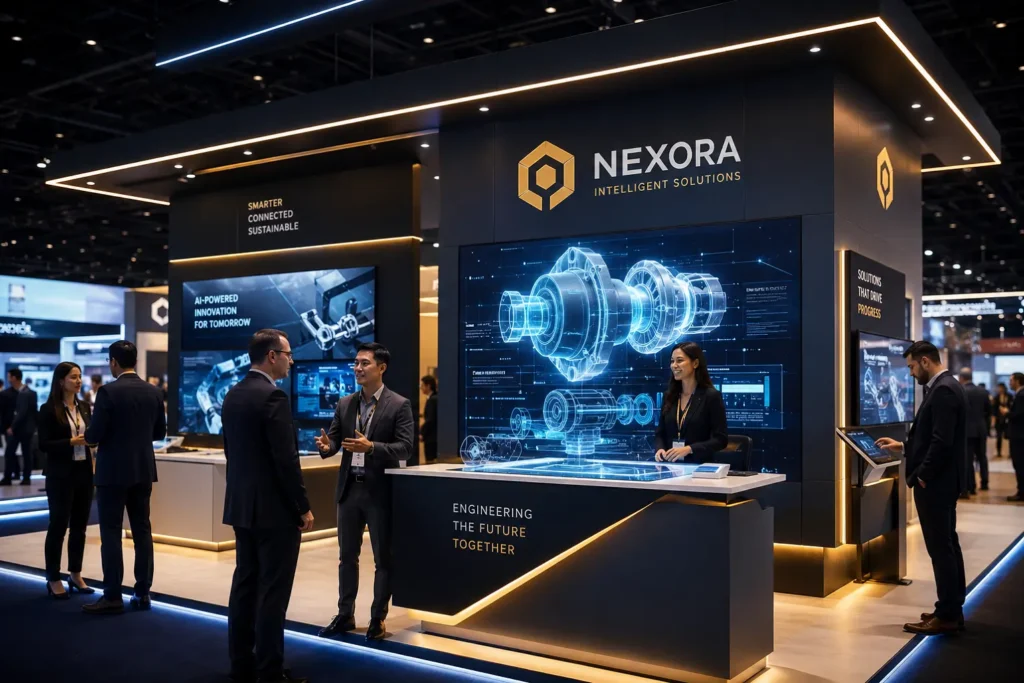
The trade show floor in 2026 is chaotic. Bright lights. Loud noises. Hundreds of booths all screaming for attention. Your job is to make your booth the one that people remember.
Let me tell you what does not work anymore. Big banners. Loud music. People in mascot costumes. Attendees have seen all of that. They walk right past it. What actually works is creating a mini experience that engages multiple senses.
The single most effective thing you can do at your booth is live demonstrations. Not pre recorded videos. Not slideshows. Real, live, human led demonstrations where someone actually shows your product working.
Here is why this matters so much in 2026. People have become numb to marketing claims. Every brand says their product is the best. But when someone watches a product work in real time, with their own eyes, that builds trust instantly. It turns a vague claim into a concrete proof.
Schedule your demonstrations at specific times throughout the day. Put up a small sign or a digital screen showing the next demo time. This creates anticipation and gives wandering attendees a reason to stop and wait.
Now let me talk about freebies. In 2026, the era of cheap plastic pens and foam stress balls is over. Attendees throw that stuff in the trash before they leave the convention center. If you are going to give away merchandise, make it something people actually want to use.
What works right now? Metal water bottles. Portable phone chargers. High quality notebooks made from recycled materials. Sunglasses. Reusable tote bags that look good. These items cost more per unit, but they are worth every penny because attendees carry them around for months. Every time someone uses your branded water bottle at the gym or your phone charger at the airport, you get free advertising.
One more thing that many brands forget. Press and media. Major trade shows are full of industry journalists, bloggers, YouTubers, and social media influencers. These people are looking for interesting stories. But they move fast. If your booth does not make it easy for them, they will walk right past.
Create a digital media kit that people can access instantly with a QR code. Have printed one pagers ready with key facts, high resolution product images, and a press release. Train your booth staff to identify media people and engage them quickly. When a reporter shows interest, make it effortless for them to get everything they need.
Post Show Marketing The Phase Most Brands Ruin
Here is where most trade show marketing falls apart completely.
A brand collects two hundred leads at a show. Then they go home. They rest for a few days because they are exhausted. Then they send one generic email to everyone saying “Great to meet you at the show.” Then they wonder why nobody replies.
That is not marketing. That is spam.
In 2026, the speed and quality of your follow up determines your conversion rate. Let me give you a system that actually works.
On the final evening of the show, before you go to sleep, sort your leads. I know you are tired. Do it anyway. Create three simple categories.
Hot leads. These are people who asked for pricing, wanted a demo, or specifically said they are looking to buy within the next thirty days.
Warm leads. These are people who showed genuine interest, asked good questions, but are not ready to buy immediately.
General network. These are industry peers, partners, or people you just exchanged cards with for future reference.
Here is the rule that top exhibitors follow in 2026. Send your first follow up email within 48 hours. Not a week later. Not ten days later. Within two days.
But do not send the same email to everyone. That is lazy. Write a personalized note to your hot leads. Reference something specific you discussed at the booth. “Hey John, great talking about your inventory management challenges at the show. As promised, here is the pricing sheet for our solution.” This reminds them who you are and shows that you actually listened.
For your warm leads, send something helpful. Not a sales pitch. An article. A case study. A short video. Something that moves them forward in their buying journey without feeling pushy.
And do not forget LinkedIn. In 2026, professional networking happens mostly on LinkedIn. Have your sales team send tailored connection requests to everyone they had a meaningful conversation with. Include a short note. “Great meeting you at the XYZ show. Enjoyed our chat about [topic].” This keeps your brand visible on their feed for weeks after the event.
One advanced tactic that works incredibly well is sending a small physical package to your top ten hot leads. A handwritten note. A branded gift. A printed summary of your conversation. In a world of digital noise, physical mail stands out like a spotlight. But only do this for your very best leads because it takes time and money.
Measuring Your Trade Show ROI in 2026
You cannot improve what you do not measure. And too many brands treat trade shows as a vague brand awareness exercise instead of a measurable marketing channel.
Here is what you should track for your next show.
Number of pre booked meetings. Number of leads captured by category. Number of live demonstration attendees. Number of media contacts made. Number of post show meetings scheduled. Revenue generated from show leads within ninety days.
That last one is the most important. Everything else is an activity. Revenue is the result.
In 2026, smart brands also track the cost per lead and cost per customer from each trade show. If you are spending ten thousand dollars to exhibit and generating fifty leads, your cost per lead is two hundred dollars. If only five of those become customers, your cost per acquisition is two thousand dollars. Now you have real numbers to decide whether that show is worth repeating.
Do not guess. Measure. Adjust. Improve.
Common Trade Show Mistakes That Still Happen in 2026
I want to point out a few mistakes that I still see smart brands making. Avoid these and you will already be ahead of most of your competitors.
Mistake one. Sending untrained staff. Your booth should never be managed by people who do not know your product inside and out. Train your team before the show. Give them scripts. Role play different scenarios. And for the love of good business, tell them to stay off their phones while on the floor.
Mistake two. Collecting business cards but doing nothing with them. A business card is not a lead. It is a piece of paper. The lead is the conversation and the follow up. If you collect cards but never follow up properly, you wasted everyone’s time.
Mistake three. Having a booth that looks like every other booth. In 2026, attendees remember experiences, not banners. Invest in something unique. A interactive display. A comfortable seating area. A small charging station. Make your booth a place where people want to rest and talk.
Mistake four. Ignoring the competition. Walk the floor yourself. See what other brands in your space are doing. What looks interesting? What looks boring? Learn from both. Do not copy, but observe and improve.
Putting It All Together for Your Next Trade Show
You now have a complete system for trade show marketing that works in 2026. Let me summarize the key actions in plain order.
Six weeks before the show. Start emailing your existing contacts. Book meetings with VIPs. Post teaser content using the event hashtag.
One week before the show. Confirm all booth logistics. Train your staff. Prepare your digital media kit. Pack your premium giveaways.
Day of the show. Run live demonstrations on a schedule. Keep your staff standing, smiling, and engaging. Scan or record every meaningful conversation. Take notes on what each lead cares about.
Last evening of the show. Sort your leads into hot, warm, and network categories. Prepare your personalized follow up emails.
Within 48 hours after the show. Send your follow up emails. Send LinkedIn connection requests. Schedule phone calls or meetings with hot leads.
Within two weeks after the show. Send physical packages to your top leads. Measure your ROI. Decide if this show deserves a spot in next year’s budget.
Trade shows are not dying. They are evolving. And the brands that evolve with them will capture opportunities that their lazy competitors leave on the table.
